Community Science and Illinois’ Riverwatch Organization
By Danelle Heike, RiverWatch Director & Stream Ecologist
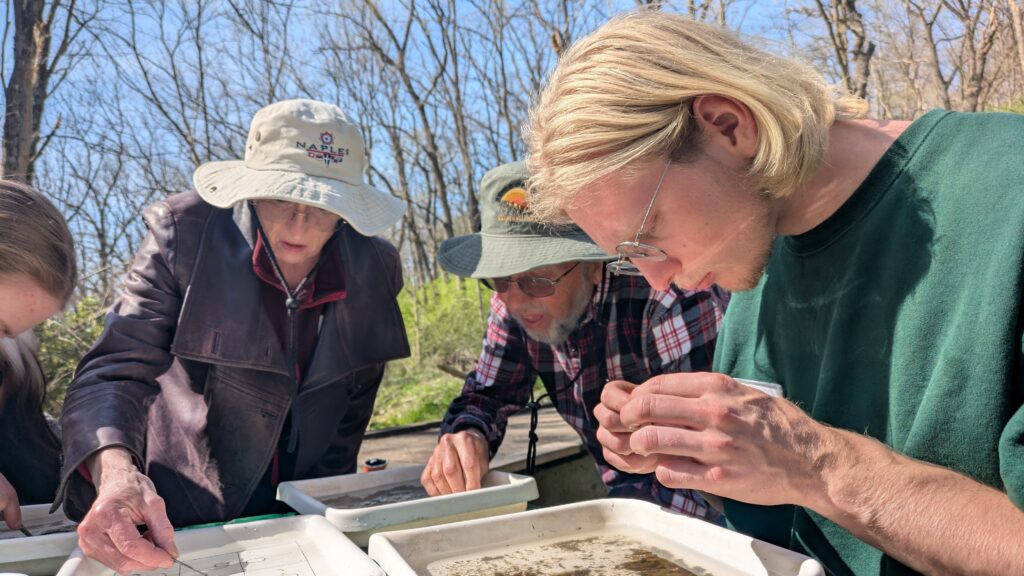
Illinois RiverWatch is a community science organization that trains volunteers to monitor water quality in local rivers and streams. Our primary RiverWatch program teaches community members to observe stream habitats and to collect and identify aquatic macroinvertebrates – small animals like insects and crustaceans that live in the water. We have been supporting volunteers in their studies of local water quality for 30 years, collecting quality data at more than 900 sites in waterways across Illinois. New volunteers are trained to be community scientists each spring, so watch for upcoming opportunities.
In addition to the basic RiverWatch program, we also operate RiverWatch PRO, which connects volunteers with professional researchers to answer specific water-related questions in a Participatory Research Opportunity (PRO). Current RiverWatch PRO projects include Illinois Crayfish Finders. This project is a collaboration with Dusty Swedberg of the Illinois Natural History Survey and involves collecting crayfish, photographing them, and submitting the photos to iNaturalist. During 2025-26, submitted photos will help provide information state-wide on the range of both native crayfish and a pair of invasive species. No formal training is required, although there is a video on our iNaturalist page to help with proper crayfish photography: https://www.inaturalist.org/projects/illinois-crayfish-finders. In addition, we have partnered with Hoosier Riverwatch in Indiana to create Indiana Crayfish Finders.
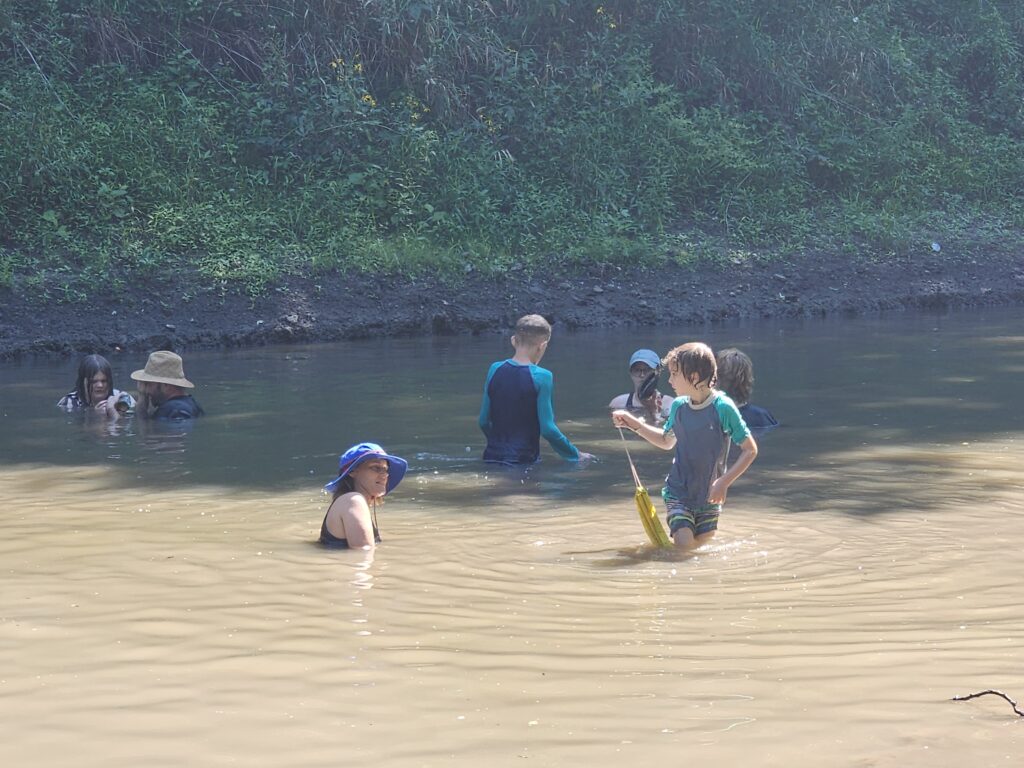
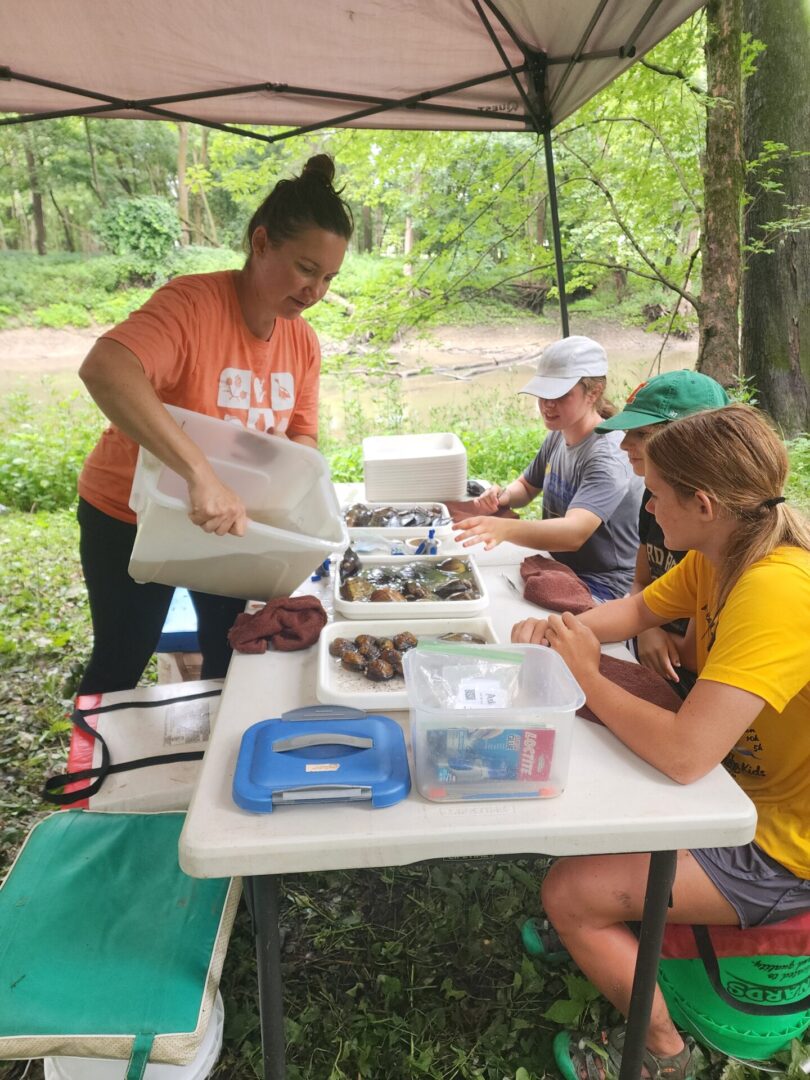
Through RiverWatch PRO, we also engage in freshwater mussel surveys to learn how many mussels are living in Illinois rivers, how quickly the mussels are growing, and how much they move in the streams. This project is a collaboration with Sarah Douglass of the Illinois Natural History Survey and all training occurs on-site for each event. It’s important to study freshwater mussels because they can help us determine if our rivers and waterways are healthy. If our animals are healthy, our rivers are healthy, and if the rivers are healthy, then that is reflected in the health of the people.
We also run Winter Chloride Watch, a program that helps volunteers monitor the impacts of road salt use on waterbodies including lakes, stream, and wetlands. When road salt is used to melt snow and ice, the salt is dissolved in and carried by the runoff into nearby freshwater water ecosystems, potentially causing harm to the plants and animals that live there. We are currently preparing to train new volunteers for the 2025-26 winter season, with on-line sessions scheduled for the evenings of October 23 and November 5. Additional in-person sessions in the Chicago region are being hosted by our partners with The Conservation Foundation.
One of the great things about community science is that anyone can participate, from 5 years old to their 70’s, We also have people of diverse racial and educational backgrounds. We’ve had volunteers who are legally blind; since you can’t usually see the mussels in the cloudy water, you are using your hands to feel for mussels on the river bottom. Community science offers a great opportunity for people of all ages and backgrounds to have fun while make meaningful contributions to science.
Information on Illinois RiverWatch and the other community science programming described here can be found at: https://ngrrec.org/riverwatch or by visiting us on Facebook or Instagram.